The Universe
A mechanic’s introduction to a civilization stretched across the stars, held together by ships, institutions, imperfect information, and people doing the best they can with what actually reached them.
Start Here Welcome to the Imperium Ships tie civilization together. Barely.
All right, greenhorn.
You’re gonna hear people talk about the Imperium like it’s one place.
It ain’t.
It’s tens of thousands of systems, hundreds of thousands of worlds, more stations than anybody can count, more governments than anybody can keep straight, and enough laws, corporations, religions, military commands, customs offices, trade agreements, local feuds, and old grudges to bury you before you ever leave the dock.
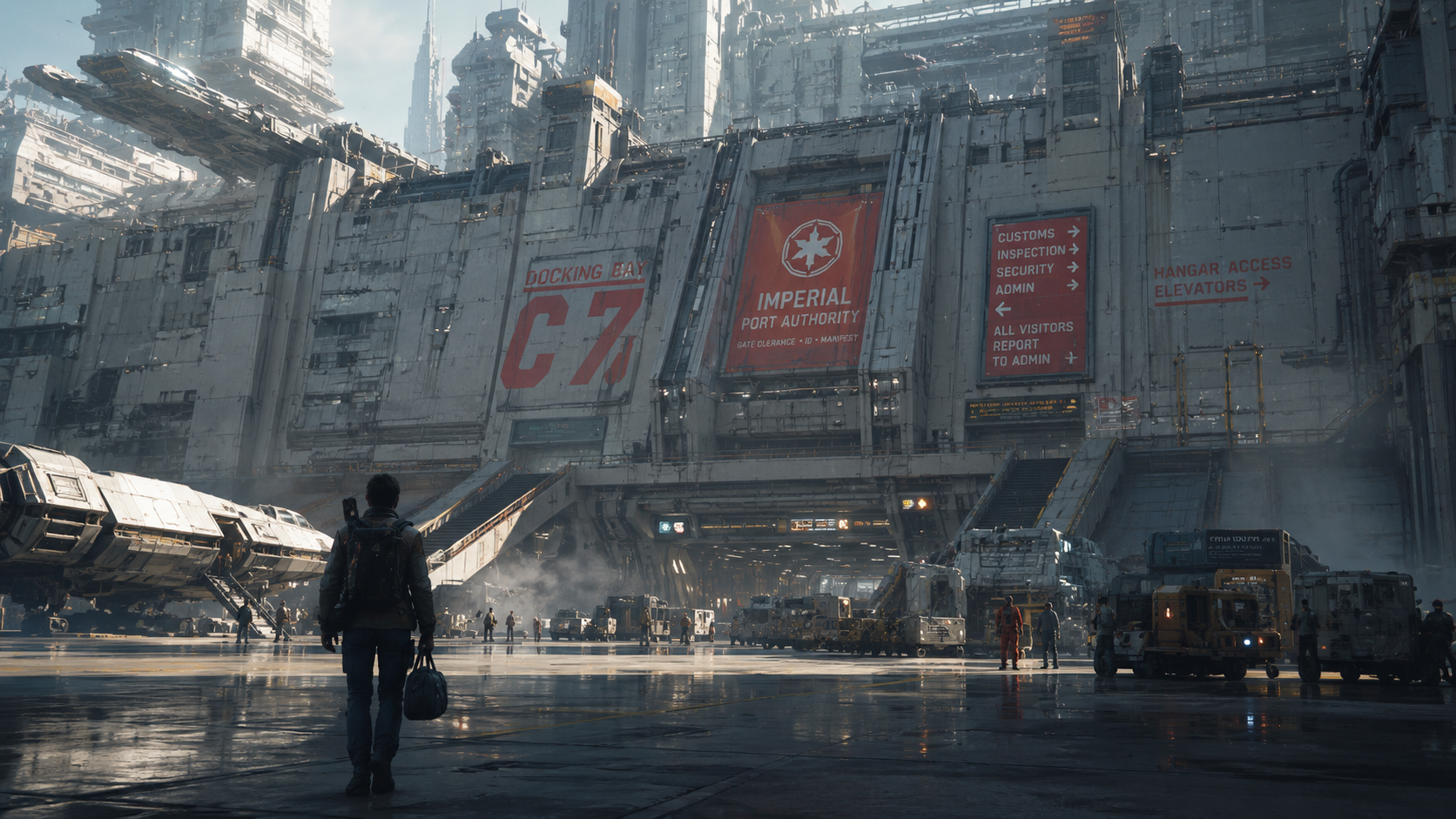
Ships tie it together.
Barely.
That’s the first thing you need to understand.
Humanity figured out how to cross interstellar space.
We did not figure out how to stop being human once we got there.
Governments still want control. Corporations still want money. People still lie. Officials still lose paperwork. Somebody still orders the wrong part. Somebody else signs off on it.
And then six months later you’re standing in an engine room wondering why the manufacturer swears the pump in front of you does not exist.
That’s civilization.
Gets thinner the farther out you go.
Authority travels. So does cargo. So does information.
None of ’em travel instantly.
That means distance matters.
Out near the center, somebody screws up and there are six departments waiting to investigate.
Out here, somebody screws up and you may be the investigation.
Get used to that.
Mind, Law, and Trust Psionics Changes Everything Once one human mind can reach another, trust becomes infrastructure.
Now we get to psions.
Don’t make that face.
They’re real.
They’re rare, but rare don’t mean unimportant.
Vacuum is rare inside a ship too. Still spend a lot of money keeping it on the other side of the hull.
Same idea.
Psionics changed civilization because once people figured out one human mind could reach into another one, half the assumptions civilization had been running on stopped being safe.
Used to be you could lock a door and figure the problem was on the outside.
Then somebody noticed the guard was part of the lock.
Used to be somebody remembered something, you could at least start from the assumption that the memory belonged to them.
Not anymore.
Used to be persuasion was persuasion, intimidation was intimidation, coercion was coercion.
Now there are arguments over where one stops and the other starts.
Courts had to figure that mess out. Security people had to figure it out. Military people figured it out real fast.
So Imperial law settled on something pretty basic:
Your mind is part of your person.
Makes sense to me.
You reach into somebody’s skull without permission, you crossed a line.
Doesn’t matter if you leave a bruise. Doesn’t matter if they ever figure out what you did.
You crossed it.
That doesn’t mean the law handles it cleanly.
Law don’t handle much cleanly.
But that’s the principle.
Security got more complicated too.
You can have the strongest door in the Imperium, but if somebody can convince the person standing next to it that opening it is a fine idea, congratulations, you bought yourself a very expensive wall decoration.
That’s why important systems use redundancy.
Two people. Independent verification. Separate authorization. Records. Logs. Sometimes psionic countermeasures.
Depends what they’re protecting.
Same thing with politics and intelligence.
A witness can be telling the truth and still be wrong. An agent can be compromised and not know it. A diplomat can walk out of a meeting believing they made up their own mind.
Maybe they did.
Maybe they didn’t.
That’s the fun part.
So everybody got more serious about verification.
Records matter. Corroboration matters. Procedure matters.
Doesn’t mean people follow procedure.
Means somebody gets to say they should’ve after everything goes wrong.
Most people don’t understand psionics worth a damn.
They’ve got opinions, though. Plenty of those.
Some people fear psions. Some admire ’em. Some think every psion can read every thought in your head from across a room. Some think the whole thing’s exaggerated. Some people won’t work with one. Some people specifically want one around.
And criminals?
Course they use psions.
If there’s a useful tool in the universe, somebody’s gonna use it for something illegal before the instruction manual gets printed.
The real danger usually ain’t somebody standing across from you throwing lightning out of their skull.
It’s smaller than that.
A hesitation. A doubt. A little extra trust.
Maybe you were already thinking about signing the contract.
Maybe all somebody did was make that choice feel a little easier.
That’s enough.
Small pushes move big things if you put ’em in the right place.
Remember that.
And don’t start thinking psions solved all our problems.
Ships still need fuel. Doctors still need medicine. Courts still need evidence. Governments still need records. Corporations still want money.
Psionics didn’t replace civilization.
They just gave civilization one more thing it couldn’t completely trust.
The Central Reality Distance Matters Distance is not empty space between adventures. It is the problem.
Now we get to the part everybody forgets until they’re stranded.
Distance.
You can cross the stars.
Fine.
That does not mean the stars are close.
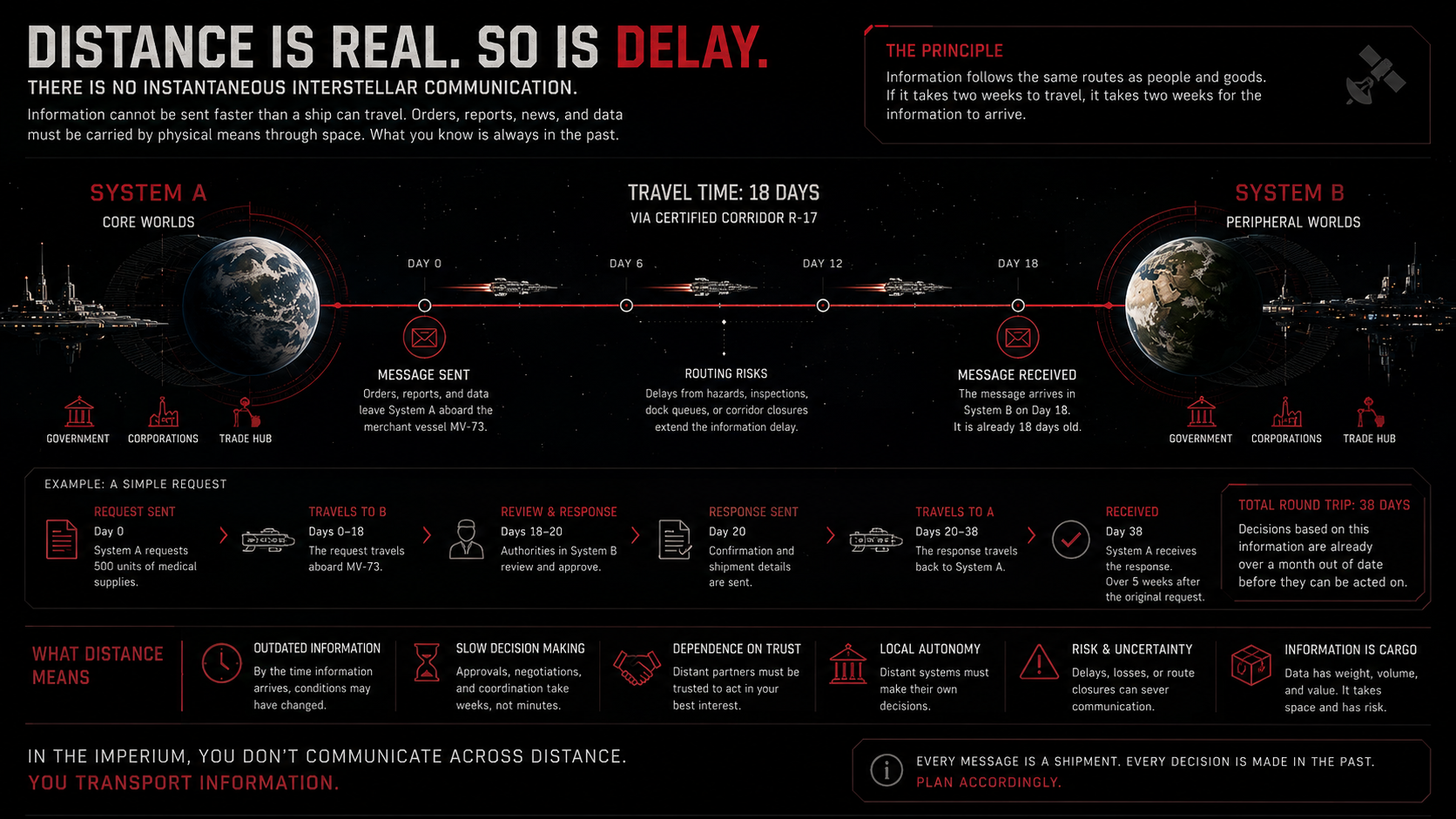
Ships travel through established routes and jump corridors. Some of those routes are old, surveyed, certified, busy, and boring.
Boring is good.
You want boring.
Boring means somebody checked the numbers before you did.
Other routes are less friendly.
Maybe the survey is old. Maybe the tolerances are narrow. Maybe somebody crossed it twice, wrote down what happened, and now a corporation calls that a commercial route.
Read the fine print.
A system can appear on every chart you own and still be a long damn way from anybody capable of helping you.
That’s another thing Core people forget.
They look at a map.
Point here. Point there. Little line in between.
Looks close.
Try hauling a broken coolant pump across that line.
Then we’ll talk.
Ships don’t just carry people and cargo.
They carry civilization.
Orders. Court decisions. Medical records. Military instructions. Corporate directives. Replacement parts. Scientific reports. News. Rumors. Bullshit.
No faster-than-light communications network is keeping everybody synchronized.
Something happens six jumps away?
Somebody has to carry the news.
By the time it gets to you, it may already be old.
By the time your answer gets back, whatever you answered may not exist anymore.
That changes how everything works.
Governments issue instructions to people they cannot supervise directly. Corporations run facilities that headquarters may not hear from for weeks or months. Military commanders make decisions based on reports from situations that have already changed. Markets move late. Criminals use the gaps. Colonies improvise.
People get away with things.
People get blamed for things they didn’t do.
Sometimes everybody follows the rules exactly and the rules are six months behind reality.
That’s distance.
It ain’t empty space between adventures.
Distance is the problem you’re living inside.
The Silence Beyond Human Space The Dark Forest The galaxy is quiet. Do not mistake that for empty.
Here’s another thing.
The galaxy is quiet.
Don’t mistake that for empty.
People used to argue about why nobody out there was talking.
They don’t argue much anymore.
We know the answer.
The Dark Forest ain’t a theory. It’s a law.
Intelligent civilizations that make themselves easy to find make themselves easy to kill.
Given enough time, the stupid ones disappear.
The careful ones don’t.
That’s natural selection with starships.
Pretty simple.
You find another civilization and you don’t know what it wants.
Maybe it’s peaceful. Maybe it ain’t. Maybe it’s peaceful now. Maybe somebody else is running the place in two hundred years. Maybe they’re primitive today and smarter than us before your great-grandkids are dead. Maybe their definition of peaceful includes things you’d object to.
You don’t know.
They don’t know either.
And interstellar communication is too slow to fix that problem.
By the time you establish trust, conditions may have changed.
So old civilizations learn.
They get quiet. They hide emissions. They conceal routes. They watch before they talk. They don’t advertise everything they know. They don’t make themselves predictable.
Civilizations that fail to learn that lesson eventually meet something that teaches it to them permanently.
That’s the Dark Forest.
Humanity was loud once.
Real loud.
Radio. Radar. Navigation systems. Industrial emissions. Military sensors.
We threw noise into space for centuries before anybody seriously asked whether announcing our address to the universe was smart.
By the time we decided it probably wasn’t, the signal was already gone.
Can’t call that one back.
Then we found the ruins.
Old ones.
Not ten thousand years old. Not a million.
Some of them are tens of millions of years old.
Somebody crossed the stars before us.
Built things. Knew things. Left things behind.
And now they ain’t here.
That changed the question.
Used to be:
Why isn’t anybody talking?
Now it’s:
What happened to the ones who did?
Remember that when you’re surveying some dead system and you find a signal nobody can explain.
First question: What is it?
Second question: Did it notice us?
Ask both.
In that order.
Life Beyond Humanity Alien Life Alien means alien.
Humanity ain’t alone either.
We’ve found life.
Plenty strange enough to make you stop wishing we hadn’t.
But forget all that old entertainment where aliens look like people with funny eyes.
Never found that.
Not once.
No near-humans. No convenient cousins. No species that happened to grow two arms, two legs, a face, and a political system we understand.
Alien means alien.
Some evolved under pressures that’d flatten you. Some breathe chemistry that’d kill you before you hit the floor. Some live in oceans we’d call industrial waste. Some developed under radiation, cold, heat, atmospheric pressures, or environments nobody sane would walk into without a suit.
They don’t just look different.
They experience the universe differently.
Different senses. Different chemistry. Different instincts. Different ways of reproducing. Different ways of communicating. Different ideas about territory.
Sometimes we’re not even sure they’ve got concepts that translate cleanly into ours.
Funny thing is, being different usually helps.
If something lives at the bottom of an ammonia ocean under thirty atmospheres of pressure, we probably ain’t fighting it over beachfront property.
It wants one thing.
We want another.
Everybody goes home happy.
Problems start when we want the same thing.
Minerals. Energy. Routes. Moons. Industrial sites. Strategic territory.
Maybe a place is habitat to them and raw material to us. Maybe they build something in a region we consider part of a shipping corridor. Maybe we mine something they consider alive. Maybe they do the same to us.
Doesn’t require hatred.
That’s important.
Everybody likes thinking wars happen because somebody is evil.
Makes the paperwork easier.
Truth is, two civilizations can be perfectly reasonable and still need the same thing.
And when the thing is limited, somebody doesn’t get it.
That’s where trouble starts.
Imperial planners know it too.
The more ecological or strategic overlap there is, the more nervous everybody gets.
For good reason.
The universe doesn’t owe us neighbors we understand.
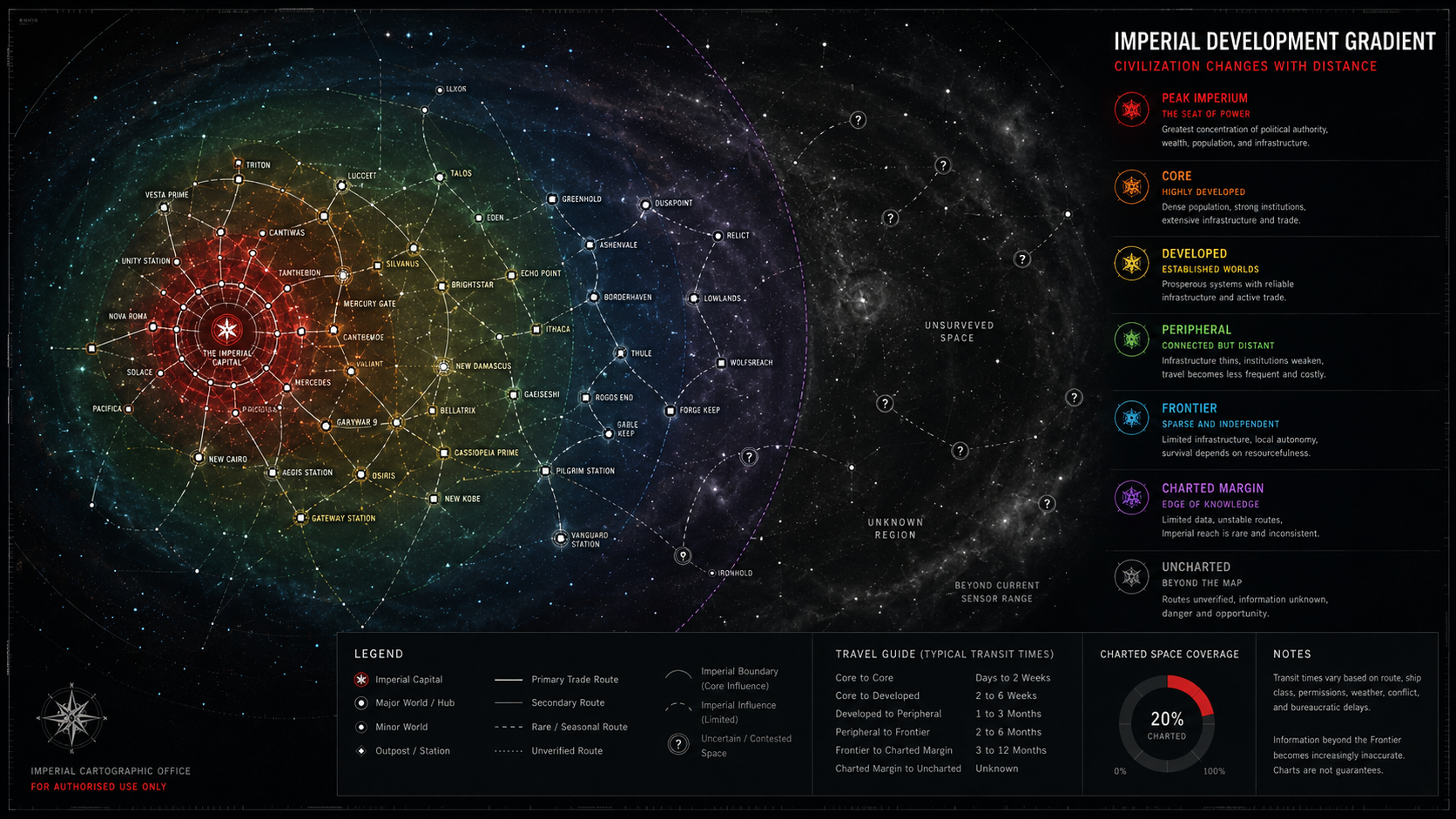
Civilization Gets Thinner The Human Galaxy Seven layers of human space, from Peak Imperium to the unknown.
Now, if you’re trying to picture human space, don’t imagine one big blob on a map.
Think layers.
The closer you are to the centers of power, the thicker civilization gets.
More ships. More money. More law. More infrastructure. More people whose job is to make sure you filled out Form 17-B instead of 17-C.
Head outward and things thin.
Not disappear.
Thin.
That difference matters.
01 Peak Imperium
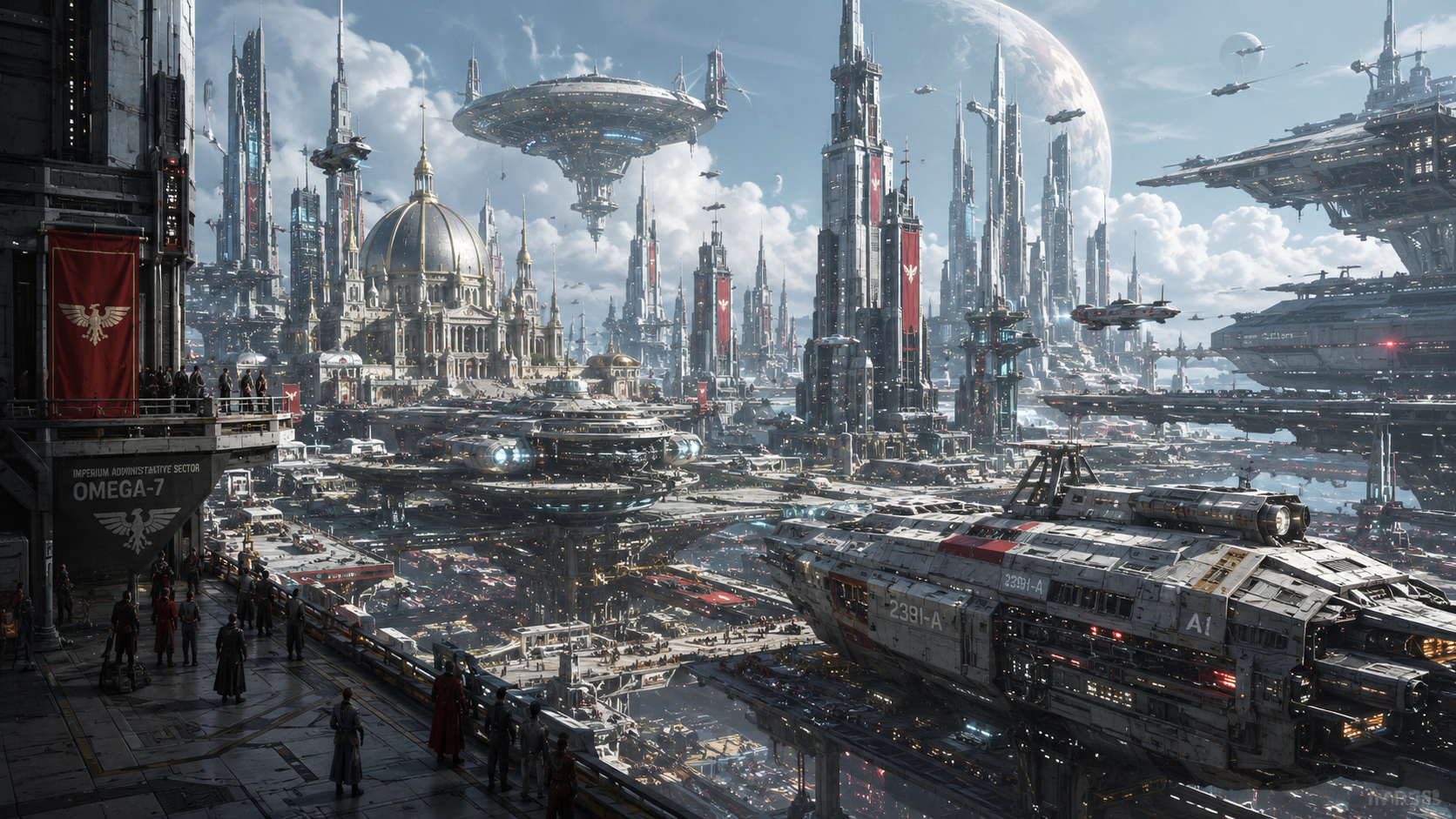
Peak Imperium is where the serious power lives.
Money. Government. Military command. Corporate headquarters. Universities. Research. Medicine. Technology. Old families. Old institutions. Old grudges.
Anything you need probably exists there.
Whether you’re allowed to use it is another question.
Everything gets recorded. Licensed. Inspected. Insured. Regulated. Filed.
If something breaks, there’s an office responsible for fixing it.
Then another office responsible for deciding whether the first office had authority to fix it.
Very civilized.
02 Core
The Core’s easier.
Rich. Connected. Reliable.
Major routes run on schedule, or close enough people complain when they don’t.
Hospitals work. Parts show up. Contracts get enforced. Courts have staff.
You break down at a Core port, odds are somebody can fix your ship.
You may need to mortgage your grandchildren, but somebody can fix it.
That’s the trade.
Reliable systems. Lots of rules.
03 Developed Space
Most people in developed space live pretty normal lives.
Factories. Schools. Freighters. Courts. Hospitals. Jobs. Taxes. Ships coming and going.
Civilization works.
Mostly.
You can still discover the only specialist you need lives two jumps away.
Or the replacement part won’t arrive for a month.
Or headquarters made a decision based on information that stopped being true before the order left the building.
Developed doesn’t mean independent.
It means the infrastructure usually catches you before you hit the floor.
04 Peripheral Space
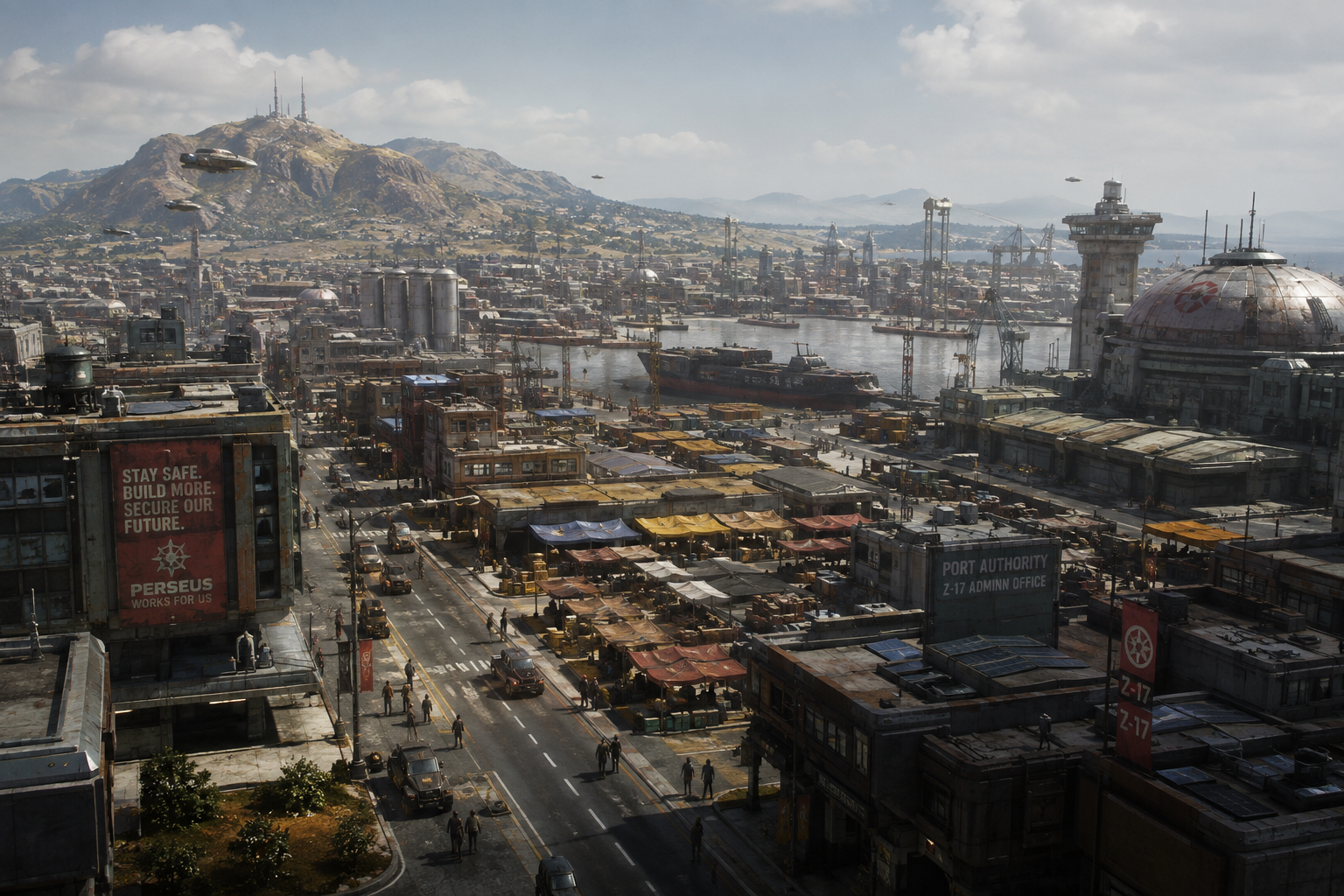
Keep going and things get thinner.
Fewer routes. Fewer specialists. More expensive parts. More local improvisation.
Outside authority still exists.
Takes longer to arrive.
That means local people make more decisions because there ain’t anybody else around to make ’em.
Law still matters. Licenses matter. Contracts matter. Money absolutely matters.
But what the rulebook says and what happens today may be two different things.
05 Frontier
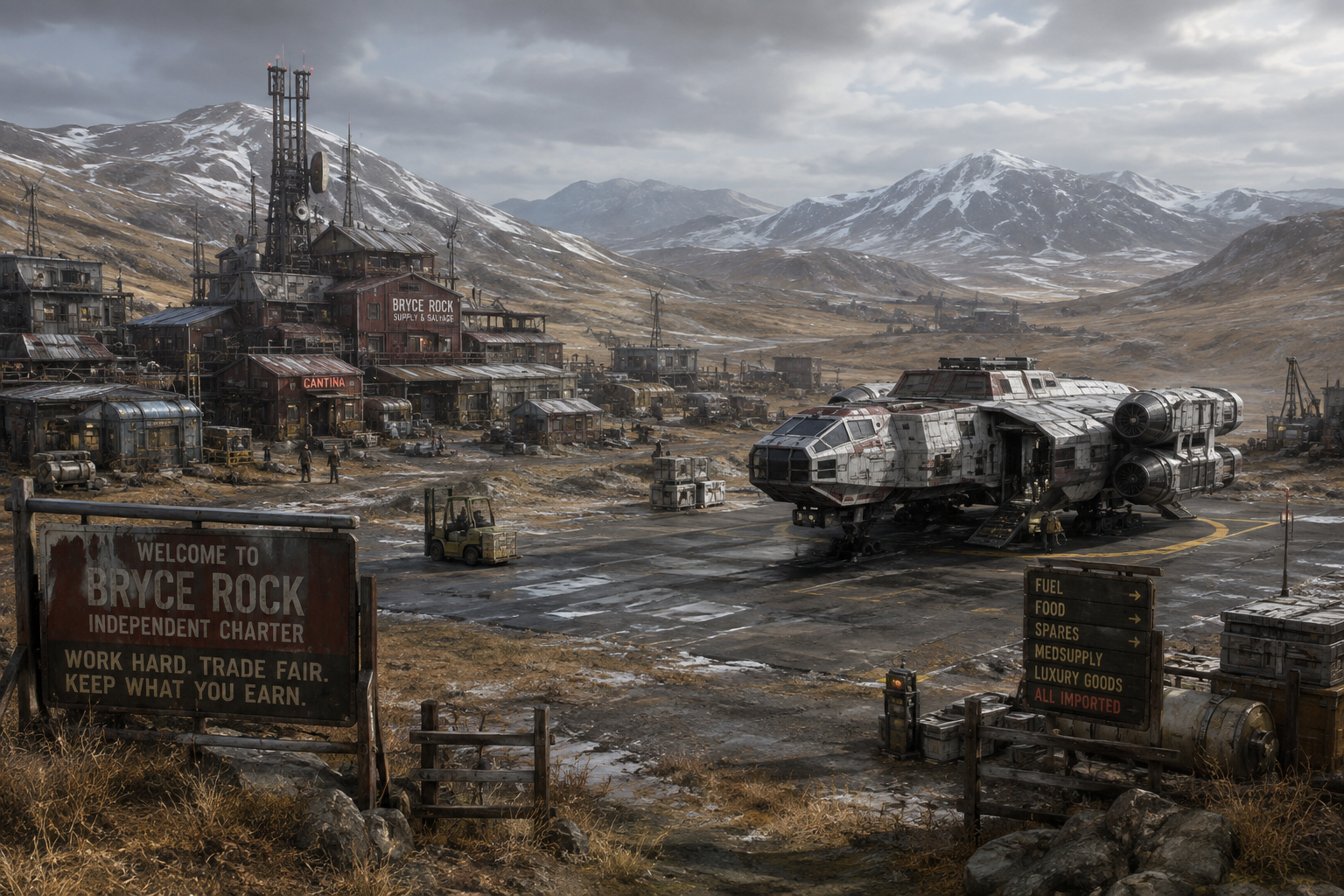
Now you’re getting somewhere.
Frontier ain’t empty.
People get that wrong.
The frontier’s full of people.
Miners. Farmers. Scientists. Mechanics. Doctors. Priests. Crooks. Families. Companies. Governments.
Everybody trying to build something before the support system catches up.
That’s the frontier.
Not lawlessness.
Incomplete infrastructure.
Your nearest surgeon might be another system over. Your replacement part may be six weeks away. Your judge may also run customs because there are only twelve people in town qualified to read Imperial legal code.
A distress call may go to the Navy. May go to Port Authority. May go to a corporate rescue ship.
Or it may go to whoever happens to hear it.
That might be you.
Welcome to the frontier.
06 Charted Margin
Past that, you get the places somebody knows something about.
Maybe a survey vessel passed through. Maybe there’s an old corporate claim. Maybe somebody dropped a beacon fifty years ago. Maybe the chart says a route exists because nobody has yet filed the paperwork saying the last three ships disappeared.
Read your dates.
A government might claim an entire system.
Doesn’t mean there’s a government employee within five jumps.
A corporation might own the mineral rights to a moon nobody from the corporation has seen in twenty years.
Claims travel farther than enforcement.
Remember that.
07 Uncharted Space
Then the maps stop.
Simple as that.
Doesn’t mean space stops.
Means our information does.
There are stars nobody’s visited. Worlds nobody’s surveyed. Routes nobody’s certified. Hazards nobody has named. Maybe civilizations nobody has encountered. Definitely things humanity didn’t build.
Human civilization is huge.
Galaxy’s bigger.
Don’t confuse the part we put on a chart with the whole thing.
Navigation Is Infrastructure The Routes Between Worlds Maps are infrastructure. Old maps can kill you.
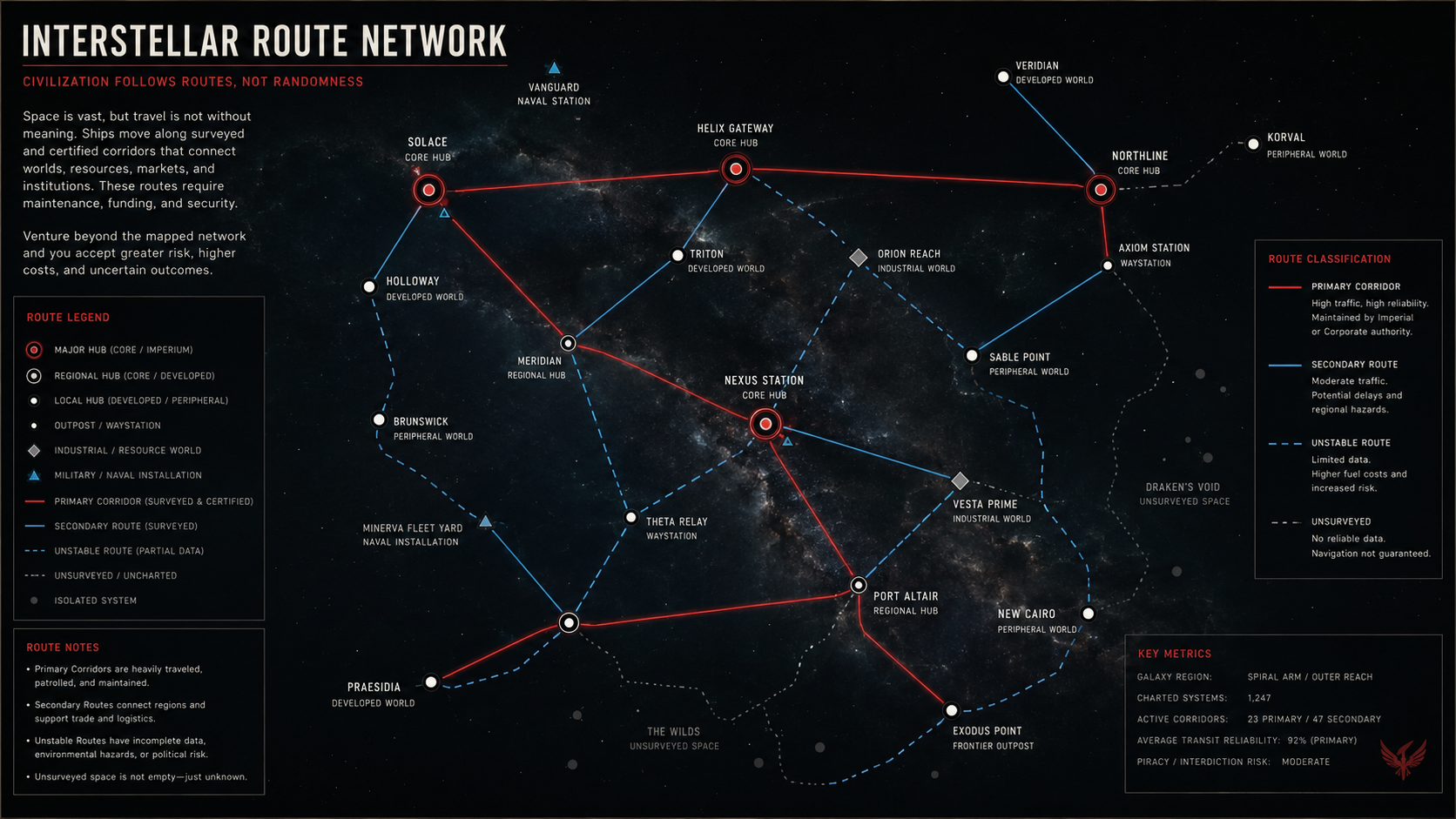
Civilization works because ships can move from one system to another often enough that everybody pretends this whole arrangement is stable.
It mostly is.
That word mostly is doing some work.
Routes don’t just appear because somebody wants to go somewhere.
They get found. Surveyed. Tested. Mapped. Certified.
Then people spend years arguing over who owns the data.
Navigation matters. Entry conditions matter. Ship condition matters. Survey quality matters.
Get all that right and a route can become boring.
Again: boring is good.
Get it wrong and things get interesting.
You can come out off target. Come out somewhere else. Come out late. Damage the ship. Miss your intended emergence completely.
Sometimes a ship doesn’t come back.
That’s why good route data is worth money.
Find a safe route and a backwater system can become a trade center.
Lose one and a thriving colony can become somebody’s expensive mistake.
Maps ain’t decoration.
They’re infrastructure.
And an old map can kill you just as dead as a bad engine.
Authority at Interstellar Scale The Imperium Its authority is everywhere. Its people are not.
You’re gonna hear a lot about the Imperium.
People talk about it like it’s everywhere.
It ain’t.
Its authority is everywhere.
Different thing.
The Imperium holds human civilization together through routes, law, taxes, military power, records, licenses, and agreements everybody has decided are better than constant war.
Mostly.
It doesn’t run every town on every planet.
Couldn’t if it wanted to.
Local governments handle local problems.
Long as the taxes get paid, the routes stay open, Imperial law gets recognized where it applies, trade continues, and nobody creates a problem big enough to threaten the larger system, the Imperium tends to let local people be local.
That gives you a lot of different worlds under the same flag.
Different governments. Different customs. Different laws. Different cultures. Different ideas about what counts as normal.
The Imperium can be unbelievably powerful.
It can also be six jumps away.
That’s something you need to remember.
There’s what the Imperium has authority to do.
Then there’s what somebody can actually do today.
Whole lot of life happens in the space between those two things.
Scale An Imperium Too Large to Know Nobody knows the whole Imperium. Nobody.
Here’s something that’ll save you some embarrassment.
Nobody knows the whole Imperium.
Nobody.
You meet somebody who says they do, check your wallet.
There’s too much.
Too many systems. Too many planets. Too many stations. Corporations. Courts. Military commands. Universities. Religions. Local governments. Languages. Industries. Wars. Treaties. Disasters. Laws. Old scandals nobody outside one planet remembers.
You cannot know all of it.
Neither can I.
Anybody tells you different, they’re selling something.
Most people know their home.
Their city. Their station. Their planet. The neighboring systems. The routes they depend on. Their job. The laws that affect them. Maybe some famous Core worlds. Maybe the big political names. Whatever’s in the news. Whatever team they follow. Whatever corporation they blame for everything.
Past that?
Gets fuzzy.
Ask somebody on one side of the Imperium about some little colony on the other and they’ll probably say:
“Never heard of it.”
Perfectly reasonable answer.
Lawyer can spend a lifetime understanding three jurisdictions. Historian can spend forty years studying one century. Naval officer can know every strategically important route in a region and still not recognize half the worlds outside it.
That’s scale.
Important thing ain’t knowing everything. Important thing is knowing when you don’t know something. Then figuring out who does.
Records, Databases, and Reality Information Is Infrastructure Information exists. That does not mean you have it.
Information exists.
That doesn’t mean you’ve got it.
Remember that distinction.
Some greenhorns think if something is in an Imperial database, everybody automatically knows it.
No.
It means it’s in a database.
Somewhere.
Maybe.
Crew arrives at a port.
Turns out docking law changed fourteen months ago.
Was the change published?
Sure.
Did anybody aboard your ship see it?
Nope.
Still owe the fine.
Maybe you’re dealing with a company that turns out to be owned by another company, owned by a holding corporation, owned by a Corporate State twelve jumps away.
Records exist.
Good luck finding the right one before dinner.
Maybe somebody hands you a warrant from an Imperial authority the local constable has never heard of.
Could be fake.
Could be legitimate.
Somebody has to check.
That’s why registries matter.
Archives. Databases. Researchers. Local experts. Old mechanics who remember the previous model number.
The Imperium doesn’t suffer from too little information.
It suffers from more information than anybody can process.
Knowing where to look is a skill.
So is knowing when to stop looking and make a damn decision.
What People Actually Know News and History History is billions of stories piled on top of each other.
News is the same way.
There ain’t one big Imperial conversation everybody’s participating in.
Too much happens.
Most people care about:
What happened here?
What happened nearby?
Will it affect me?
And was it strange enough that everybody’s talking about it?
War three sectors away might be the biggest thing in the universe to a naval planner.
Mechanic on some industrial moon might care more that a labor strike two jumps over means no replacement bearings next month.
That mechanic ain’t stupid.
He’s paying attention to the thing that can actually ruin his week.
History gets worse.
Imperial history goes down forever.
Every planet’s got history. Every military’s got history. Every corporation has a version of history it wishes everybody would use.
Colonies. Religions. Routes. Wars. Migrations. Industries. Political movements. Whole societies you’ve never heard of.
People can spend their entire lives studying one little piece.
Which occasionally creates problems for me.
I’ll say something like:
“Used to be a decent yard on Callisto Reach.”
Then some smart kid looks it up.
“Mac, Callisto Reach hasn’t had a shipyard in a hundred and twelve years.”
…
“Yeah.”
Was a good yard too.
Anyway.
Point is, history ain’t one story.
It’s billions of stories piled on top of each other.
Don’t expect to know them all.
Private Power Corporations Government with shareholders. Or corporation with borders.
Now, corporations.
You’re gonna deal with ’em.
Everybody does.
Governments make rules.
Corporations make half the things the rules are about.
Ships. Fuel. Refineries. Food. Medicine. Stations. Housing. Insurance. Loans. Weapons. Mining equipment. Cargo containers.
Sometimes the air.
You find a company big enough and it may operate across hundreds of systems.
Some corporations got so big the Imperium finally stopped pretending they were normal companies and allowed them to govern themselves.
Those are Corporate States.
Government with shareholders.
Or corporation with borders.
Depends who writes the brochure.
You land in one of those places, the company may own the port, the housing, the hospital, the reactor, the security service, the court, and the debt that brought you there.
Corporate law says it’s all properly separated.
I’m sure that’ll make you feel better.
Distance makes corporate power stranger.
Headquarters can be months away from knowing what its own people are doing.
Local management gets instructions written for conditions that no longer exist.
So they improvise.
Later headquarters approves it.
Or objects.
Or fires everybody.
Or claims it never authorized anything.
Standard procedure.
Economics Has Mass Trade Everything you put on a ship costs money to move.
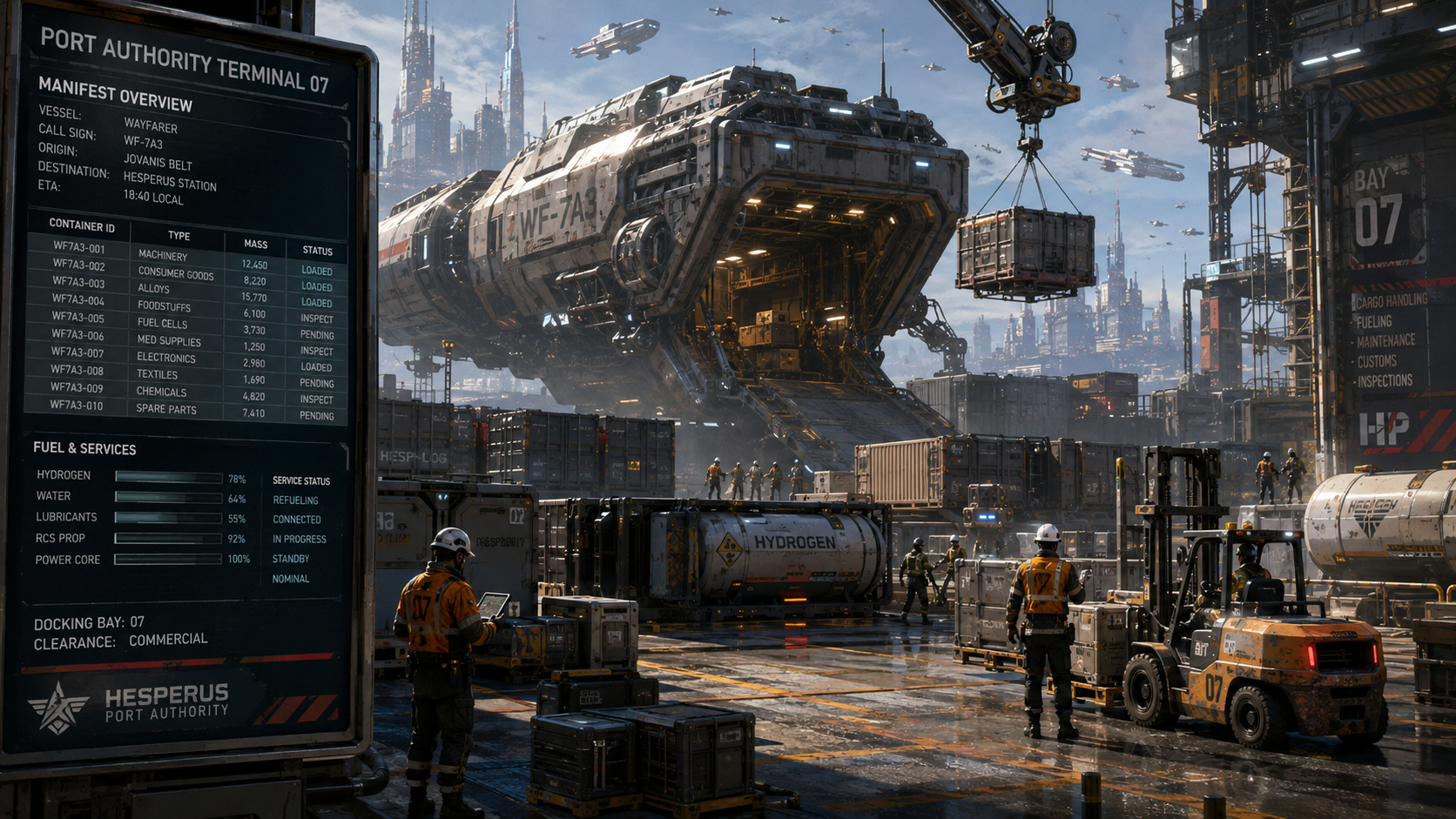
Everything you put on a ship costs money to move.
Remember that and half of interstellar economics starts making sense.
Bulk cargo hurts.
Water. Ore. Food. Construction material. Industrial feedstock. Cheap manufactured goods.
You can move it.
Question is whether anybody can afford it when it arrives.
High-value cargo’s easier.
Medical systems. Advanced electronics. Specialized parts. Precision instruments. Rare materials.
Same cargo space.
More value.
That means worlds develop weird combinations.
You can find a frontier colony with medical equipment that could rebuild half your liver but they’re rationing replacement membranes for the water plant.
Shipyard capable of fabricating fusion components may import farm machinery because nobody local bothers making it.
High technology does not mean self-sufficient.
Everybody depends on somebody.
Break one important route and you find out who real fast.
Home, Workplace, Machine Ships Transportation, workplace, home, life support, and debt with an engine attached.
Now we get to something important.
Ships.
Without ships, all those worlds might as well be islands.
A ship is transportation.
Workplace. Home. Investment. Life-support system.
And debt with an engine attached.
She needs fuel. Parts. Maintenance. Crew. Docking. Inspections. Licenses. Repairs.
Ignore any of those long enough and she’ll remind you.
Ship stops making money?
Bills don’t care.
Dockmaster doesn’t care.
Bank definitely doesn’t care.
Sooner or later you start looking at contracts you promised yourself you’d never take.
That’s how adventures happen.
People talk like ships exist to carry crews around.
Got it backward.
Crew exists to keep the ship alive long enough for the ship to keep them alive.
Take care of her.
She’s doing the same for you.
And remember:
The ship has bills.
Civilization Remembers Institutions People forget. Institutions remember.
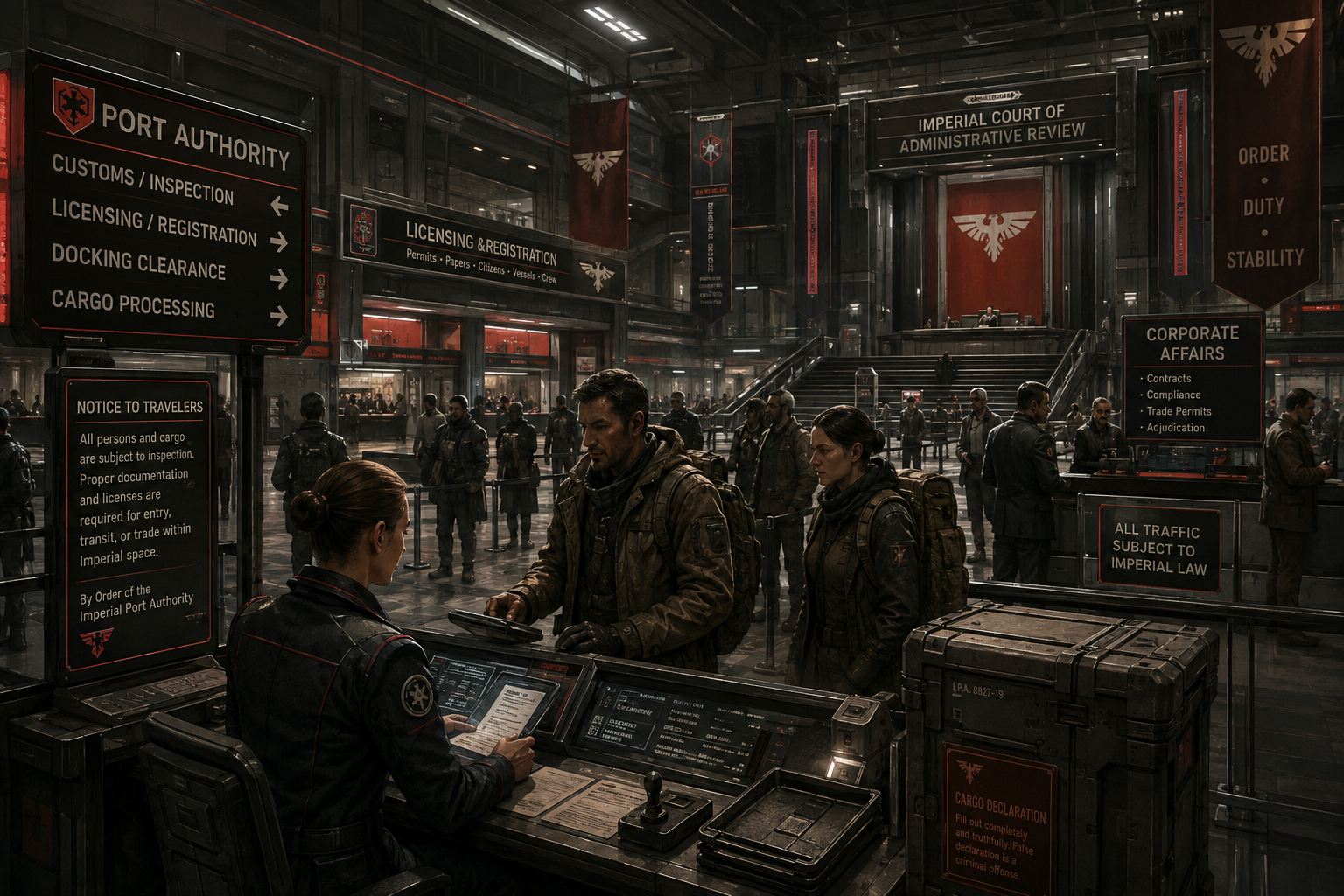
Now before you decide every institution in the Imperium is useless, understand something.
Civilization needs ’em.
People forget.
Institutions remember.
Registries. Courts. Customs offices. Ports. Hospitals. Licensing agencies. Navies. Police. Universities. Insurance companies. Shipping firms. Churches. Corporations.
All those records and procedures are how millions of people who’ve never met each other manage to cooperate without shooting one another every Tuesday.
Problem is, institutions are made out of people.
People make mistakes. People lie. People protect their jobs. People protect their friends. People protect the institution.
Sometimes they protect the public too.
You can have a manifest that’s wrong. A legal warrant based on bad information. A quarantine that saves a city. A quarantine used to hide something. A corporation can follow every regulation on the books and still leave somebody dead.
Don’t make the mistake of thinking institutions are evil.
That’s lazy.
They’re systems under pressure.
Sometimes they work.
Sometimes they fail.
Sometimes they work exactly the way they were designed and that’s the problem.
Learn the difference.
Before Humanity The Ancient Past Humanity was not first.
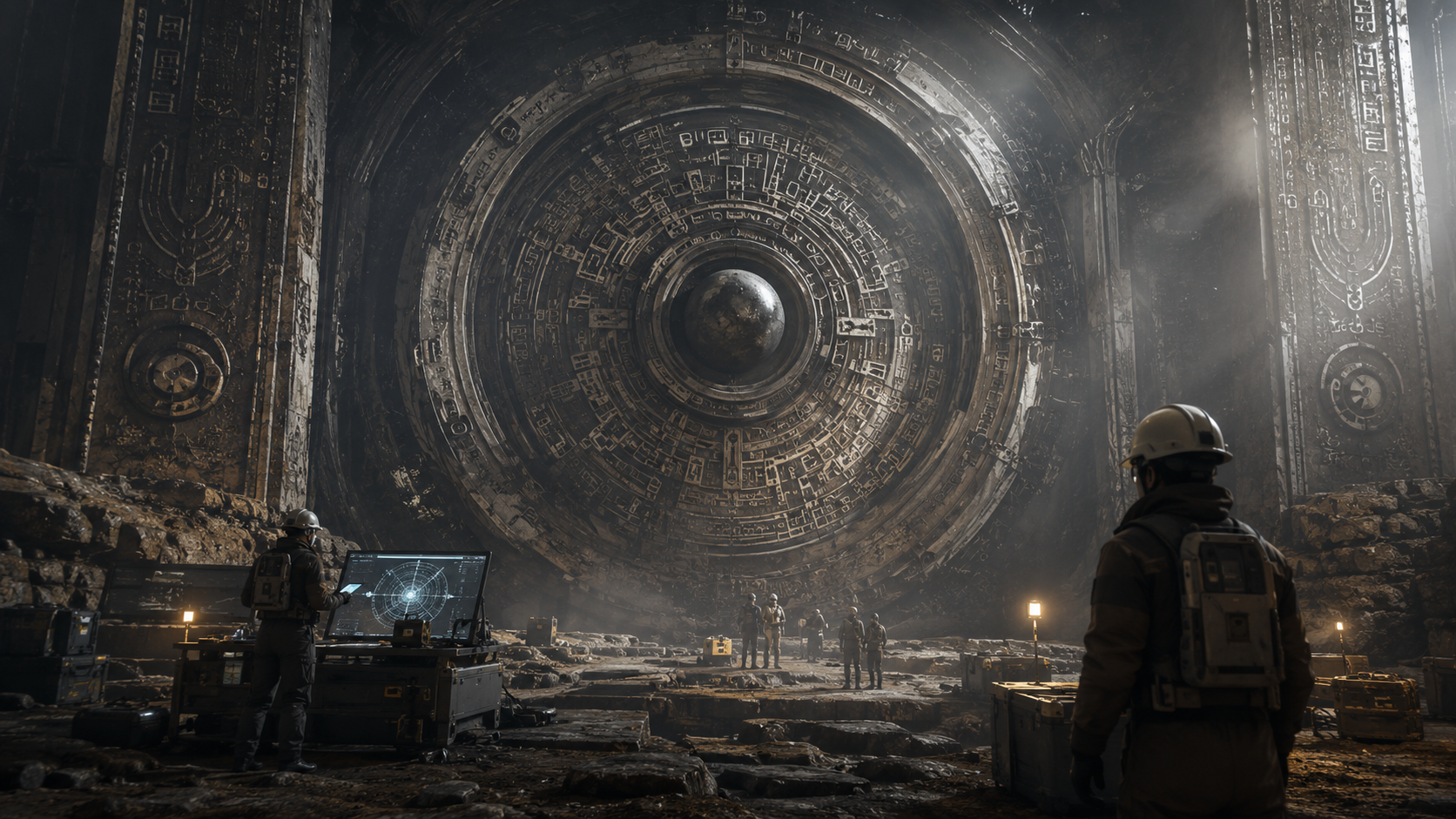
Humanity wasn’t first.
Get comfortable with that.
Something crossed the stars long before there were human beings around to look up.
Some of what we’ve found is around sixty-five million years old.
Think about that next time somebody tells you their dynasty is ancient.
We’ve found structures. Machines. Artifacts. Things nobody can explain properly.
Some changed human civilization.
Some mostly created arguments.
One of the biggest discoveries happened back on Earth.
Ancient complex.
What used to be northern Minnesota.
Found about fifteen thousand years ago.
Humanity built around it.
Studied it.
Eventually the Psionic Academy grew there.
That discovery changed what we knew about consciousness, technology, and the universe.
Mostly because it proved something nobody particularly wanted proved.
We were late.
Real late.
And whatever came before us had plenty of time to leave things behind.
Question is why they didn’t stay.
Physics Still Collects Technology No machine eliminates consequences. Some just delay the invoice.
Don’t let all the fancy equipment fool you.
Technology’s advanced.
Physics still collects.
Ships need reaction mass. Engines make heat. Parts wear out. Electronics fail. Structures corrode. Filters clog.
People need food. Water. Air. Medicine. Sleep.
You can build a machine capable of crossing interstellar space and lose the whole thing because one pump decided it had worked enough for one lifetime.
That’s not a contradiction.
That’s engineering.
Technology gives you more things you can do.
Usually gives you more things you have to maintain too.
No machine eliminates consequences.
Some just delay the invoice.
Beyond the Reliable Map Exploration Can we get there? Can we get back? Should we open that?

Frontier keeps moving.
Always has.
Survey crews find routes. Corporations chase resources. Scientists chase questions. Governments plant flags. Settlers follow all of them.
Smugglers usually arrive earlier.
Ships disappear. New systems get mapped. Old maps turn out wrong.
People say exploration is about discovering new worlds.
Sometimes.
Mostly it’s asking practical questions.
Can we get there?
Can we get back?
Can humans survive there?
Do we need suits?
Does anything already live there?
Does it care that we’re here?
Is the survey accurate?
Is that signal natural?
Is that thing under the surface geological?
Did something build it?
Is something watching us?
And finally:
Do we really want to open that?
Sometimes the answer is yes.
That’s how people get rich.
Sometimes the answer should’ve been no.
That’s how places get named after dead survey crews.
For the Player What This Means for You You do not need to know the whole universe.
Now, greenhorn, here’s the part you actually need.
You do not need to know the whole universe.
Nobody does.
Your character doesn’t either.
Know your job. Know your ship. Know where you came from. Know who you trust. Know enough about the place you’re standing to recognize when something doesn’t smell right.
That’ll get you started.
Everything else?
Learn it when it matters.
Need repairs?
Now that port matters.
Corporation hires you?
Now you care who owns it.
Local law says your cargo is illegal?
Congratulations, you’re learning local law.
Route gets questionable?
Now you care who surveyed it.
Alien species suddenly wants the same moon you were hired to mine?
Guess what you’re studying tonight.
You don’t recognize something?
Ask. Look it up. Call somebody. Check the registry. Find a local. Hire a specialist.
Or make the best decision you can with what you’ve got.
That last one happens more than anybody likes admitting.
There are tens of thousands of systems.
Hundreds of thousands of worlds.
You ain’t memorizing them.
Good.
Neither did anybody else.
Competence ain’t knowing everything.
Competence is knowing what you know, knowing what you don’t, and
having enough sense to tell the difference.
You learn the universe one problem at a time.
Same as everybody else.
One Last Thing The Universe Does Not Revolve Around You Good news, really.
One last thing.
You ain’t the center of this.
Good news, really.
Means the universe doesn’t need you to save it every week.
You might save somebody.
Maybe a whole colony.
You might expose something powerful people wanted hidden.
You might destroy something expensive. Start a war. Stop one. Find something nobody knew existed.
Maybe you change history.
Fine.
While you’re doing that, everybody else keeps moving.
Markets change. Ships leave port. Governments issue orders. Corporations chase money. Systems wear down. Relationships change. Civilizations watch from the dark.
People remember what you did.
Or misunderstand it.
Or write it down wrong.
Or never hear about it at all.
That’s the scale of the place.
The Imperium contains more information than any one person could know.
The galaxy contains more places than humanity has ever seen.
And all that silence outside human space?
Don’t assume nobody’s there.
So keep your ship maintained.
Check your information.
Ask questions before opening sealed doors.
Don’t trust a map just because somebody printed it.
And if something starts making a noise nobody else can hear, come find me.
Probably nothing.
Probably.
And probably ain’t a specification.
Mac